













The Garmin Approach R50 is a launch monitor with the simulator built in. It reads the ball with 3 high-speed cameras from beside the tee and plays Home Tee Hero's courses on its own 10-inch touchscreen, so there's no PC or tablet in the chain. It's £4,299 from us. Here's what it measures, what independent tests found, the room and membership it needs, and what a full R50 bay costs in the UK.
Quick summary
- The R50 is worth it if you want real courses on a big screen without a PC, and at £4,299 it costs more than 10 times a £421 Garmin R10.
- It's £4,299 on its own and £5,499 to £5,908 in our SimBox package, and a 3m SimBox bay with a full HD projector, mount and cable comes to £6,526.98.
- It tracks more than 15 ball and club metrics with 3 high-speed cameras from about 0.5m beside the tee, and the club numbers need a sticker on the clubface.
- Plugged In Golf's indoor test found the ball data close to a Foresight GCQuad and the club data hit and miss.
- Home Tee Hero's 43,000+ courses need a Garmin Golf membership at £89.99 a year or £8.99 a month, and the driving range and shot data work without one.
- A bay for it wants 3m of width, 2.8m of height and 4.5m of depth, and since it sends out 1080p at most, a full HD projector shows everything it draws.
Is the Garmin R50 worth it?
Yes, if you want to play real courses on a big screen with nothing in the chain but a projector and a membership. If you mainly want your numbers, a Garmin R10 at £421 gives you ball speed, carry and spin for about a tenth of the price.

The Garmin Approach R50 is £4,299. The box holds the unit, a carrying case, 250 club tracking stickers, and the mains adapter and power cable. The screen is built in, which saves a fight over the family iPad.
| What it does well | Where it falls short |
|---|---|
| Plays 43,000+ courses on its own screen, no PC needed | The courses need Garmin Golf, £89.99 a year |
| Ball data close to a GCQuad in Plugged In Golf's test | Club data less consistent, and it needs a sticker |
| Sits about 0.5m beside the ball, with nothing behind you | A left-hander moves it to the other side of the mat |
| Up to 4 hours on the battery, for the range too | £4,299, more than 10 times the price of the R10 |
What does the Garmin R50 measure?
Ball, club and result numbers, more than 15 metrics in all, from 3 high-speed cameras beside the ball. After each shot it also plays back a high-speed video of impact. Garmin's launch release says it measures spin rate and spin axis.
| Group | What it measures | What it needs |
|---|---|---|
| Ball | Ball speed, launch angle, launch direction, spin rate, spin axis | Nothing extra |
| Club | Club head speed, face angle, club path, face to path, angle of attack, smash factor | A sticker on the clubface, with club data switched on |
| Result | Carry, total distance, apex height, deviation | The ball data |
For club data, Garmin's owner's manual has you stick one of the included stickers on the face of each club you want numbers from, and replace it when it's worn or dirty. The putter needs none, because club data isn't recorded for putts. With 250 in the box, you'll run out of clubs long before you run out of stickers.
Golf Monthly's tester found club data switched off out of the box.
The catch: once you switch club data on, the area the ball has to sit in gets smaller, so on a worn mat there's less room to find a fresh spot.
How accurate is the Garmin Approach R50?
Both independent tests below found the ball data accurate, and the one run beside a Foresight GCQuad found the club numbers less reliable.
Matt Saternus tested the R50 indoors beside a GCQuad for Plugged In Golf's review (2 January 2025). The ball numbers almost matched the GCQuad's, while the club data was "hit and miss", with angle of attack the weakest. In the comments, a reader's 7-iron angle of attack read 2 to 4 degrees steeper than on a Trackman 4, and Saternus agreed.
Golf Monthly's Joel Tadman tested it at the indoor studio at Peterborough Milton Golf Club (6 February 2025). He found the data accurate and the simulator close to faultless. He couldn't run it beside a GCQuad, because interference stopped both units tracking.
Garmin's manual lists what throws the readings off:
- Ball flight conditions that don't match where you play.
- Low sun on the unit or the clubface.
- The ball's logo turned away from the unit, which matters most on a matte ball.
- A sticker on or near white decoration on the clubface.
- Anything reflective in the cameras' view.
Indoors, that means you light the ball from above and keep anything glossy out of the cameras' sight. The full-length mirror you check your posture in goes on another wall.
How much space do you need for a Garmin R50?
A room 3m wide, 2.8m high and 4.5m deep takes a full R50 SimBox bay. Garmin's manual puts the R50 about 0.5m to the side of the tee, facing it, at about the same height as the tee, with no levelling needed.

- Height: 2.8m lets a full driver swing clear the ceiling, 3m is comfortable, and at 2.4m you're down to irons and wedges.
- Width and handedness: the R50 sits across the mat from the golfer, so a left-hander moves it to the other side. A room shared by a left- and a right-hander wants 4m of width, and 4 of our 7 SimBox sizes are 3.6m wide or more.
- Depth: nothing goes behind you, which is why 4.5m is enough where a radar unit wants 5m.
- Aim: you can adjust target alignment up to 10 degrees left or right by placing 2 balls in the areas shown on screen. If the tee isn't in the middle of the screen, an external display setting shifts the picture sideways.
- Power: on the mains it runs without the battery, and it can't charge from a USB-C cable, so plan a socket within reach of where it stands.
✓ Do this
Stand the R50 about 0.5m to the side of the tee, facing it, level with the hitting surface, with the ball's logo towards it and nothing shiny in front of its cameras.
✕ Not this
On the floor below a raised mat, angled at the screen, with a glossy floor, a mirror or low sun in the cameras' view.
The R50 crosses the mat every time the left-handed mate steps up.
Do you need a projector for the Garmin R50?
No. It plays on its own 10-inch screen, which is plenty for your numbers and a squint for a par 5. A projector or TV on its HDMI port adds the big picture, and it can mirror the R50 or show a different view.
The R50's maximum output is 1080p, according to Garmin's manual, so a full HD short throw projector shows everything Home Tee Hero sends.

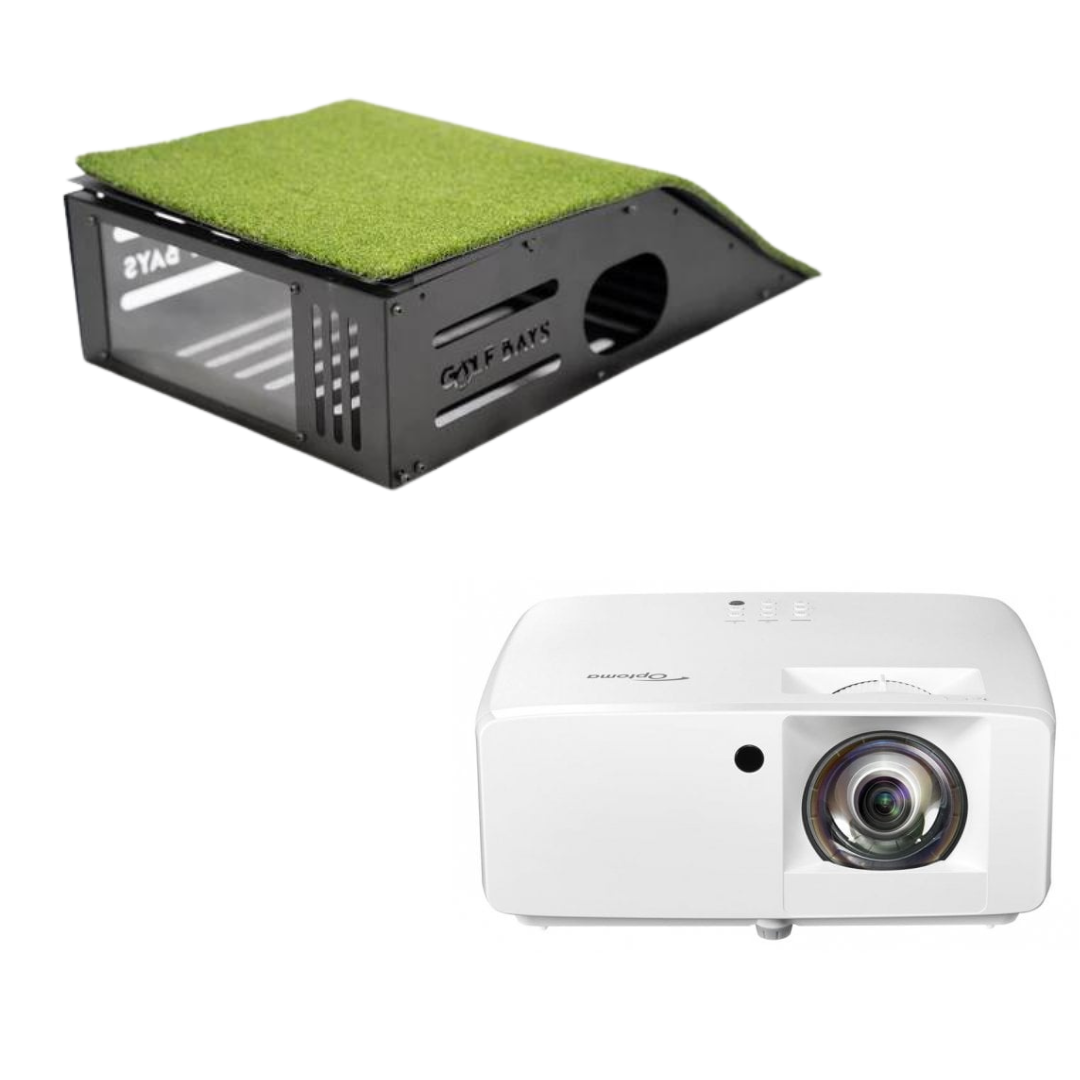
The Optoma GT2200HDR is £899, a full HD short throw with 3,300 lumens and a 4LED light source rated for 30,000 hours. Full HD is plenty on most home screens, and 4K pays off when a PC runs the software in 4K.

Garmin doesn't put an HDMI cable in the box. Our 10m HDMI 2.1 cable is £29.99, long enough to reach a projector on the ceiling.
In-game sound needs a Bluetooth speaker or the speakers in your TV or projector.
Watch out: a 4K projector on a 1080p launch monitor
A 4K laser short throw at £2,374 costs £1,475 more than the GT2200HDR, and on Home Tee Hero the R50 sends out 1080p at most. The extra pixels only show when a PC runs third-party software in 4K, so price the PC first, then decide on 4K.
Does the Garmin R50 require a subscription?
For Home Tee Hero's courses, yes. Garmin's manual asks for a Garmin Golf membership to play or practise on a virtual course and to enter the weekly tournament. The driving range and your shot data need none.
Garmin's golf simulator, Home Tee Hero, runs on the R50 itself, and the manual has you download the courses you want over Wi-Fi. Up to 4 players can share a round, according to Garmin's launch release.
| What you want to do | Garmin Golf membership? | What it costs |
|---|---|---|
| Driving range, shot data and impact video | No | Nothing |
| A Home Tee Hero round on 43,000+ courses, up to 4 players | Yes | £89.99 a year or £8.99 a month |
| Practice on a virtual course, or the weekly tournament | Yes | The same membership |
| GSPro on a PC | No, GSPro has its own | £250 a year, plus a Windows PC |
How much does a Garmin R50 subscription cost?
Garmin Golf costs £89.99 a year or £8.99 a month on Garmin's UK site, and both plans renew automatically. Paying monthly for a year comes to £107.88, £17.89 more than the annual plan.
The catch: Home Tee Hero is on the R50 from day one, and without the membership you can't play a round on it.
Do you need a PC for the Garmin R50?
Only for some third-party software, GSPro among them. The R50 sends every shot over Wi-Fi to compatible simulator software, and you can drive that software with a Bluetooth keyboard paired to the R50.
GSPro is £250 a year on a Windows PC, and it lists the R50 among its supported launch monitors. Awesome Golf also works with the R50, and it runs on a Mac or an iPad.

If you go the GSPro route, our HD Spec gaming PC is £1,790, with an NVIDIA RTX 5060 Ti graphics card.
For the price of the GSPro route over 3 years, Garmin Golf would run for 28 years.
How much does the Garmin R50 cost in the UK?
£4,299 on its own, £4,649 with an EazyNet practice net, £5,499 to £5,908 in a SimBox package, and £6,526.98 for a 3m SimBox bay with the projector kit.
The Garmin R50 SimBox package

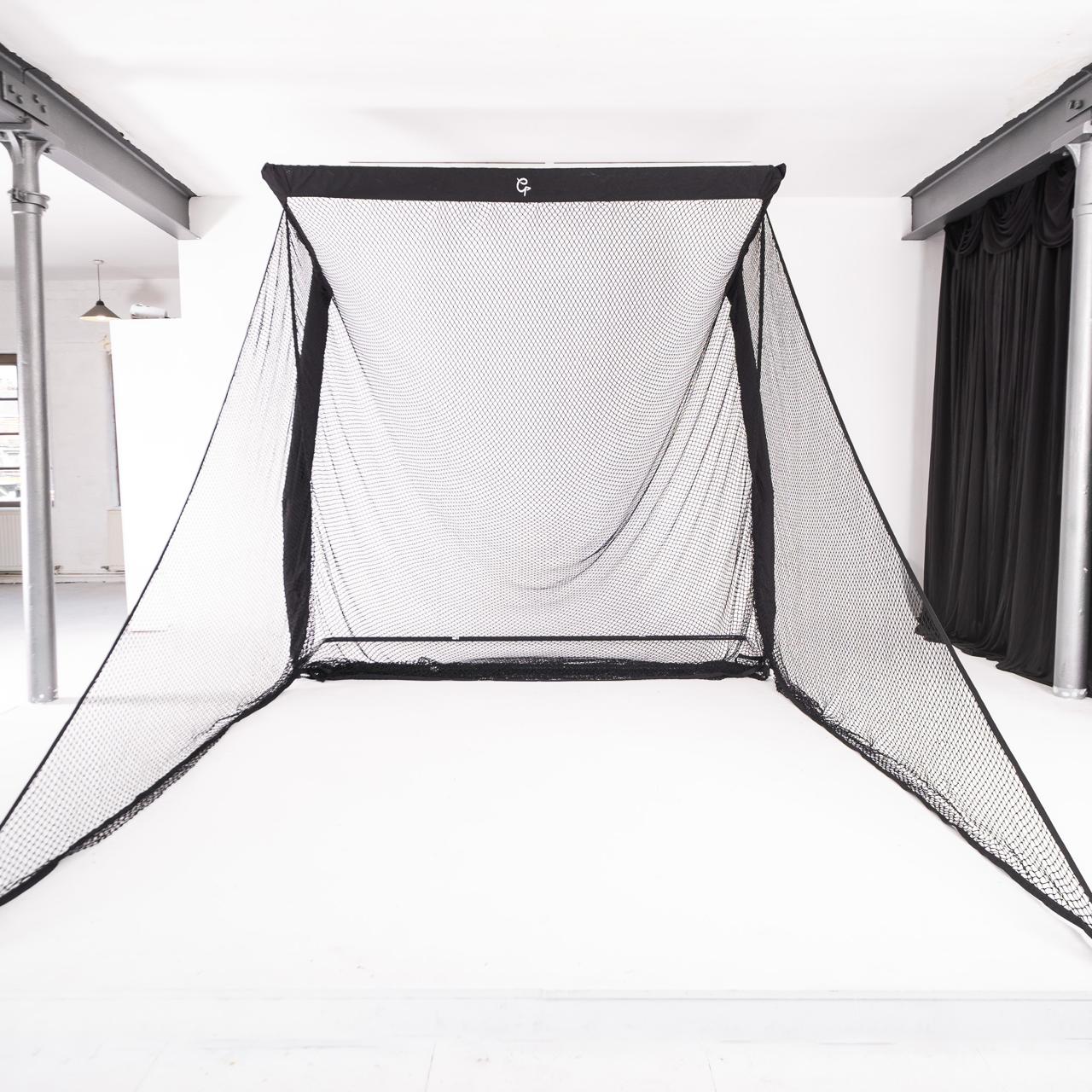
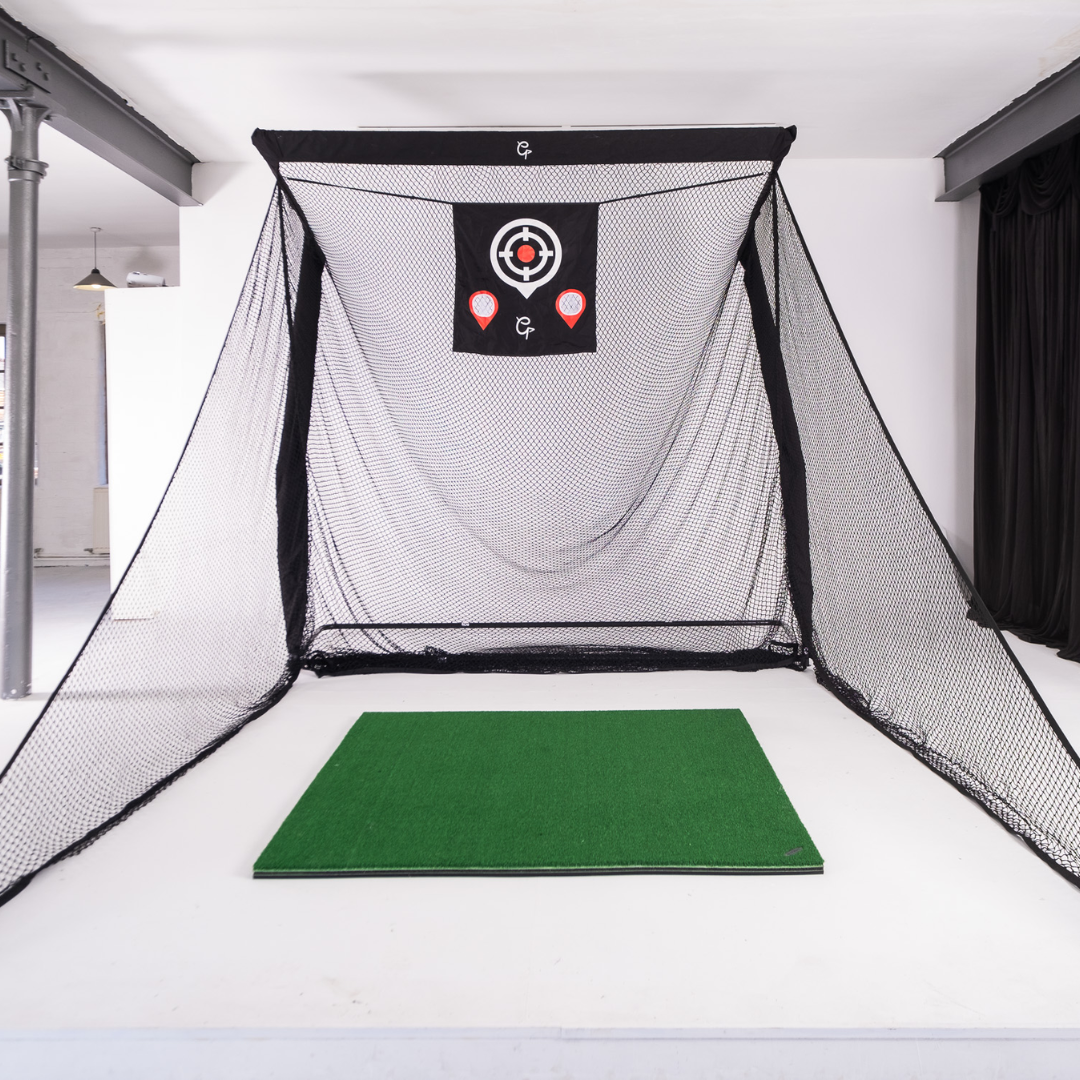
The Garmin Approach R50 SimBox package puts the R50 in our SimBox enclosure, which clicks together without tools in under an hour. At 2.6m wide it's £1,200 more than the R50 on its own.
| Size (W x H x D) | Price |
|---|---|
| 2.6m x 2.5m x 1.5m | £5,499 |
| 3m x 2.5m x 1.5m | £5,558 |
| 3.6m x 2.5m x 1.5m | £5,608 |
| 4m x 2.5m x 1.5m | £5,658 |
| 3.8m x 2.8m x 1.5m | £5,708 |
| 3m x 3m x 3m | £5,808 |
| 4m x 3m x 3m | £5,908 |
The jump from the smallest frame to the biggest is £409, which is nearly an R10.
The Garmin R50 EazyNet practice net package

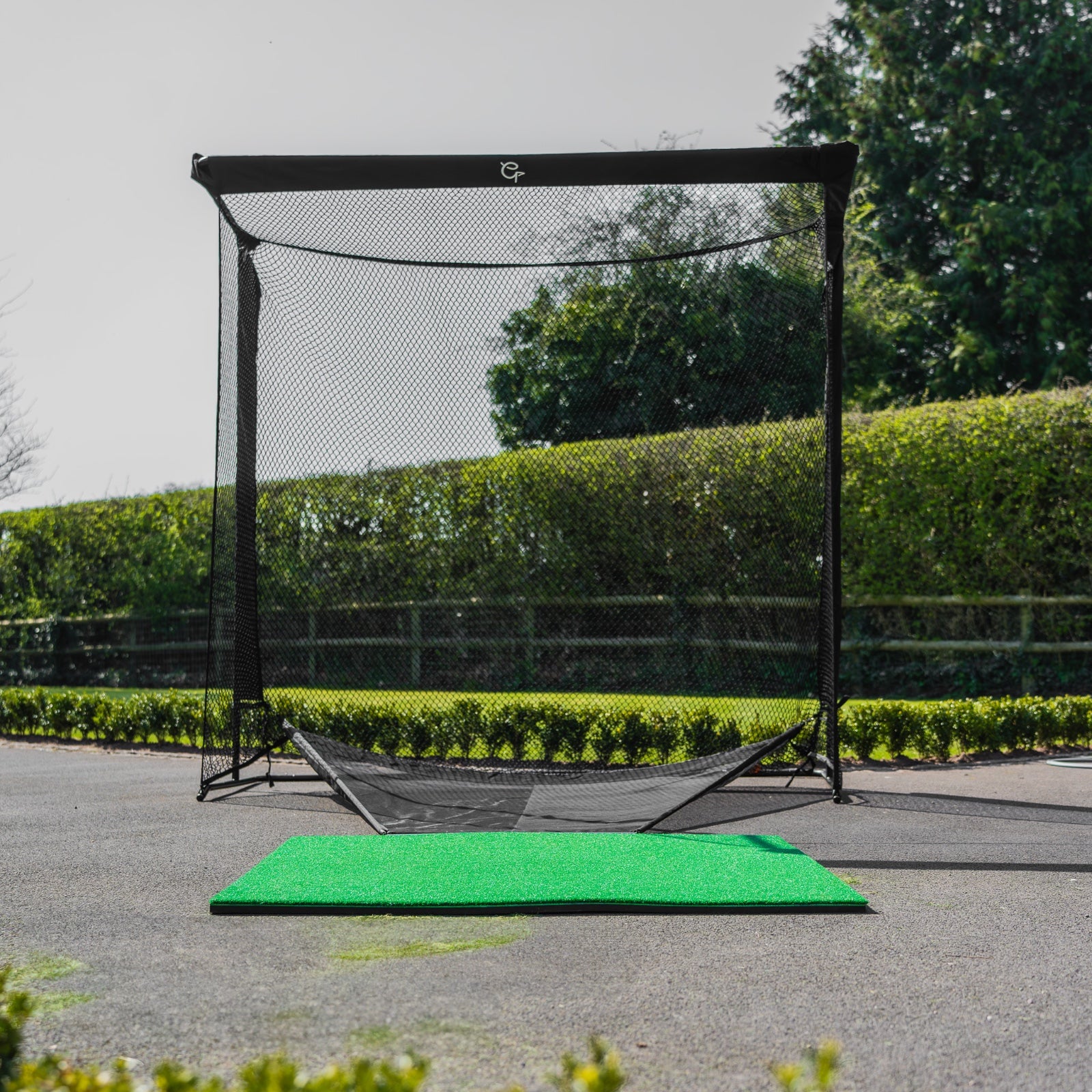
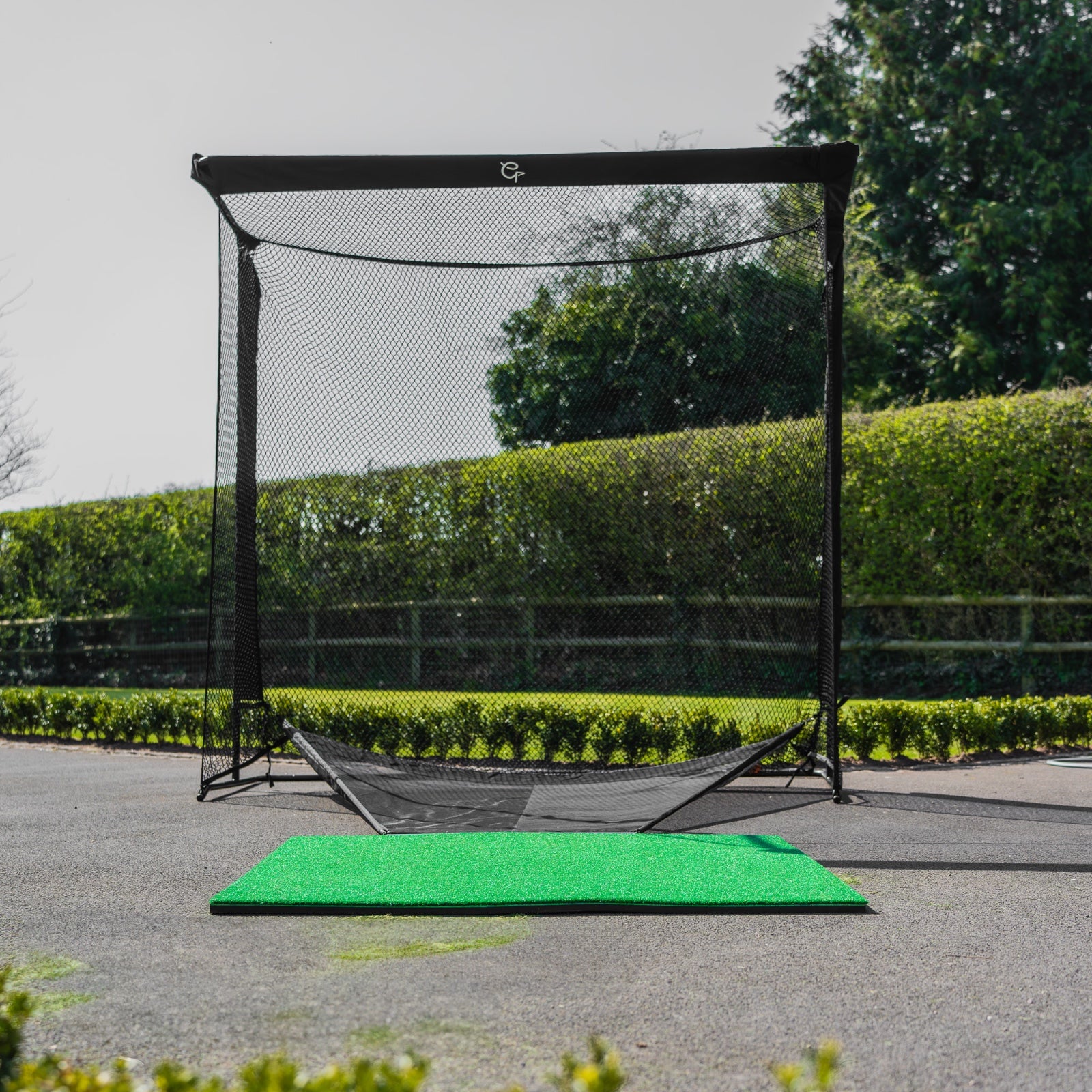
The EazyNet Golf Practice Net Package with the R50 is £4,649. The R50 plays its courses on its own screen, so you can still play Home Tee Hero in a net bay.
The catch: the picture is 10 inches across, and the ball stops in the net before you see it fly.
How much does a complete Garmin R50 bay cost?
£6,526.98 at 3m wide with the projector kit, or £6,796.95 with 3 years of Garmin Golf.
That £6,526.98 is the top of the mid-range band for a UK golf simulator, which starts at £3,508.98 with the same projector kit.
Not sure your room fits an R50 bay?
Send us the room's height, width and depth, and tell us if a left-hander will use it too. We'll suggest the SimBox size and the projector that fit. It's free.
Book a free consultationWhat problems do Garmin R50 owners report?
Owners on Garmin's forum raise the pace of firmware updates and a few reading quirks, on top of the club data above.
- Firmware: in an autumn 2026 thread on Garmin's Approach R50 forum, one owner complained that months had passed without an update, and another said an update in January brought a putting bug.
- Ball type: one owner's list of gripes on the same forum says spin seemed wrong with yellow balls, and range balls read nowhere near the right spin off a wedge.
- False shots and mulligans: the same owner had white socks or white shoes read as a shot, and could only take a mulligan within 5 seconds.
- Battery and settings: Plugged In Golf found only a short gap between the low-battery warning and shut-off, and Golf Monthly's tester had to bend or kneel to change settings.
GolfBays tip
Once the R50 reads every shot, mark the tee spot and the unit's spot on the mat with a strip of tape, so it goes back to the same place after a left-hander's turn or a trip to the range.
Dark socks are cheaper than a firmware update.
Is the Garmin R50 better than the R10?
Yes, if you want cameras reading the ball at impact and courses on the unit's own screen. If you only want the numbers on a budget, the R10 does the job for about a tenth of the price.

The Garmin Approach R10 is £421, and its radar sits 1.8m to 2.4m behind the ball, with the numbers on your phone or tablet.
| Garmin Approach R50 | Garmin Approach R10 | |
|---|---|---|
| Reads the ball with | 3 high-speed cameras | Radar |
| Where it sits | About 0.5m beside the tee | 1.8m to 2.4m behind the ball |
| Room depth | 4.5m | 5m |
| Screen | 10-inch touchscreen on the unit | Your phone or tablet |
| Putting in Home Tee Hero | Live putting, or switch it off | Putts added automatically |
| Battery | Up to 4 hours | Up to 10 hours |
| Price | £4,299 | £421 |
| SimBox package at 3m | £5,558 | £1,969 |
The gap between them is £3,878, enough for 9 more R10s with £89 left over.
Garmin R50 alternatives
Where a launch monitor sits decides the room: camera units beside the ball need 4.5m of depth, radar units behind the ball 5m to 6.1m, and a ceiling unit leaves the floor clear.
Which is better for golf, the Garmin Approach R50 or the Full Swing KIT?
The KIT if club data comes first and the room is at least 5.5m deep, and the R50 if you want courses on its own screen in a 4.5m room.

The Full Swing KIT is £5,999, £1,700 more than the R50. It's a radar unit that sits about 3m behind the ball, so indoors the room wants 5.5m to 6.1m of depth. Its app runs on iPhone and iPad, and it plays E6 Connect and GSPro for simulator golf.
Plugged In Golf rates the KIT the better buy at the price if club data is your priority.
A cheaper camera unit: the SkyTrak ST MAX

The SkyTrak ST MAX is £1,695 with a year of SkyTrak Core. It pairs a camera with radar and sits beside the ball, so 4.5m of depth is enough. Its app runs on Windows, macOS, iOS and Android.
The catch: it has no screen of its own, and Core is £249.99 a year from year 2.
Who should buy the Garmin R50?
- Golfers who want courses without a PC: Home Tee Hero runs on the unit, and a projector adds the big picture.
- A garage or spare room 4.5m deep: nothing goes behind you, so you don't need the 5m a radar unit wants.
- The range and the garden too: up to 4 hours on the battery, with a carrying case in the box.
- Households taking turns: up to 4 players in a Home Tee Hero round, and a profile each that keeps its own handedness.
Who should skip the Garmin R50?
- Numbers on a budget: the R10 at £421 gives you the shot numbers.
- Club data first: the Full Swing KIT, if the room is 5.5m deep or more.
- A narrow bay shared by a left- and a right-hander: a ceiling unit built for right and left-handers never has to move.
Garmin R50 FAQs
When did the Garmin R50 come out?
Garmin launched the Approach R50 on 12 November 2024, so it turns 2 this month.
Will the Garmin R50 go on sale?
It has been on sale with us. The R50 was £3,879 in our October sale and is back to £4,299. We can't promise when the next R50 sale comes.
Can you putt with the Garmin R50?
Yes, Home Tee Hero rounds have live putting, and you can switch it off to have 0 to 3 strokes added by how close your approach finished. Putting is off in the weekly tournament. A camera unit beside the ball reads the putt at impact, and the putter needs no sticker. One owner on Garmin's forum found putts ran slow in Home Tee Hero.
Does the Garmin R50 work outdoors?
Yes. Garmin rates it IPX3, which means it withstands spraying water. It works from -10°C to 55°C on up to 4 hours of battery. Keep low sun off the unit, and in a garden net setup the launch monitor is the first thing indoors when it rains.
How long does the Garmin R50 battery last?
Up to 4 hours, according to Garmin. On the mains it runs without the battery. It only charges between 3°C and 47°C, so in a cold garage in winter you charge it indoors.
Does the Garmin R50 come with a case?
Yes, a carrying case with a shoulder strap, and the 250 club stickers come in it. Golf Monthly puts the unit at just over 4kg, so it goes to the range in one hand.
Can left-handed golfers use the Garmin R50?
Yes. Set left-handed in your profile and move the unit to the other side of the mat. A bay shared with a right-hander wants 4m of width, so the R50 has room on both sides.
Can you use the Garmin R50 with GSPro?
Yes, GSPro lists the R50 among its supported launch monitors. It costs £250 a year and runs on a Windows PC, which a Home Tee Hero bay doesn't need.
Build your bay around the R50
The R50 on its own, with an EazyNet net, or in a SimBox package in 7 sizes, alongside the rest of our Garmin range.
See our Garmin range